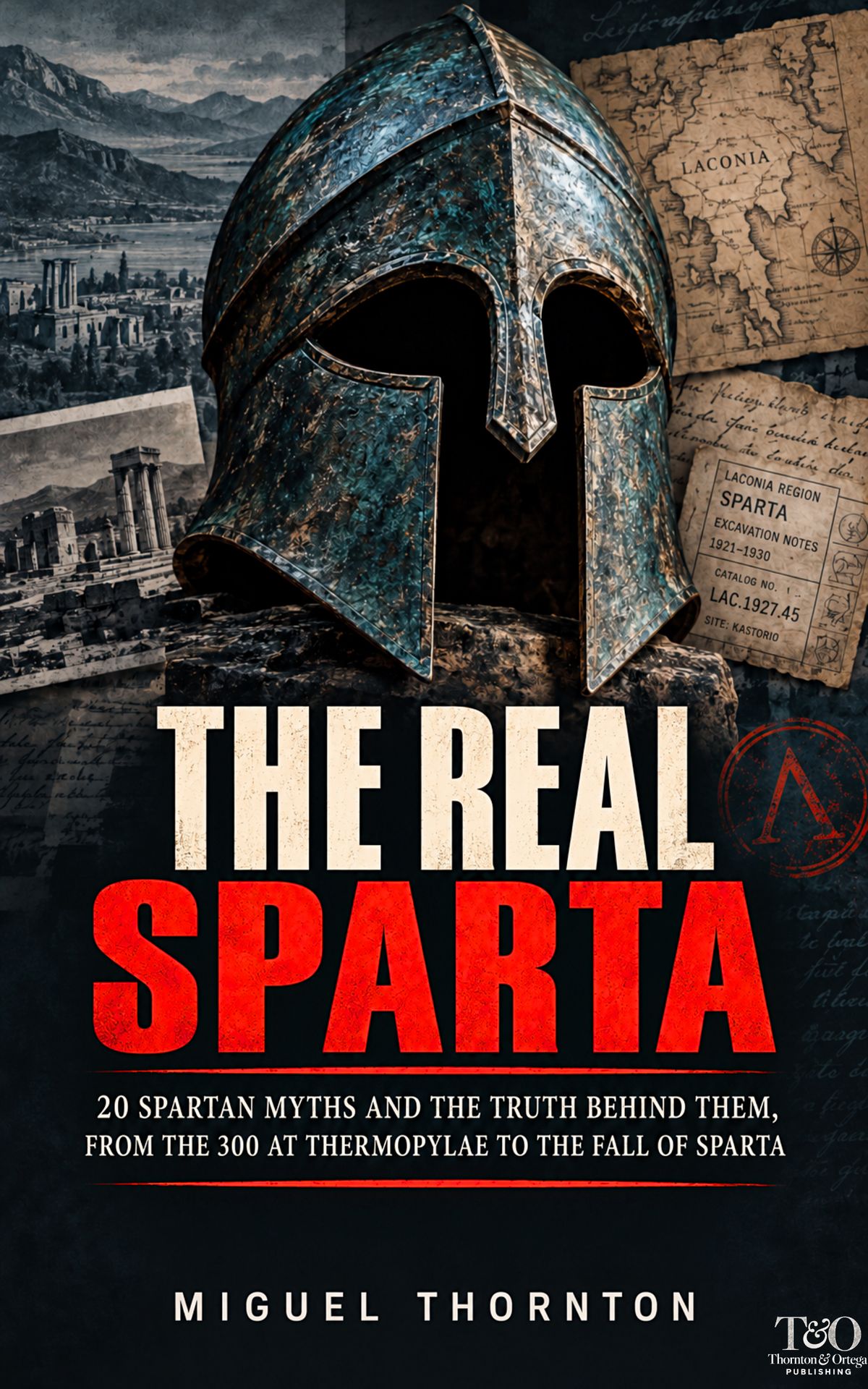
The Real Sparta
20 Spartan myths and the truth behind them, from the 300 at Thermopylae to the fall of Sparta

20 chapters · 110 pages · EPUB & PDF
$6.99
EPUB + PDF · works on any device · no DRM
- Secure payment by Stripe
- Instant download
- 14-day refund before download
Introduction + Chapter 1 · Free · No email needed
About this book
The two Greek words carved beneath Leonidas’s statue at Thermopylae, now seen on American flags and rifles, appear nowhere in Herodotus. They surface in a collection of sayings written some 580 years after the battle. Much of what we picture about Sparta took shape the same way.
Each chapter takes one familiar story and asks who first told it, when, and on what evidence. You come away able to separate the documented Sparta from the later legend, with the ancient passage in hand.
Herodotus, read closely, puts the 300 at the core of an allied army of several thousand. The whipping of boys at the altar of Artemis Orthia appears in Xenophon as a contest to steal cheeses; the ordeal with crowds and deaths is attested only centuries later, under Roman rule. The corrections cut both ways. Thucydides records some two thousand helots promised freedom, garlanded, then made to disappear, firmer evidence of Spartan terror than the tale of young hunters with daggers.
The Sparta left standing is one you can defend in detail: soldiers formidable enough to fear and human enough to lose, and a stand at Thermopylae worth honoring for what Herodotus actually recorded.
Questions about this book
Does the book cover Spartan women and whether they fought in battle?
Yes. One chapter weighs what Xenophon, Plato and Aristotle report on Spartan women’s athletics, property and role in war, and covers Cynisca, sister of King Agesilaus, whose chariot team won at Olympia in 396 and 392 B.C.
Does the book use archaeological evidence or only ancient writers?
Both. Alongside the ancient texts, it uses excavated finds: arrowheads from the hill of the last stand at Thermopylae, the bronze facing of a shield taken from Spartans at Pylos and found in Athens in 1936, and Linear B tablets unearthed near Sparta in 2008.
Does the book cover how Sparta declined and fell?
Yes. The last chapter follows Sparta from Leuctra in 371 B.C. through the Roman period, setting Herodotus’s figure of about 8,000 Spartiates in 480 B.C. against Aristotle’s count of fewer than a thousand.
Reader reviews
No reviews yet.