The Myths of Rome
20 popular myths about the Roman Empire, and what the evidence really shows

20 chapters · 202 pages · EPUB & PDF
$6.99
EPUB + PDF · instant download
- Secure payment by Stripe
- Instant download
- 14-day refund before download
EPUB + PDF · works on any device · no DRM
Paperback · only on Amazon (opens in a new tab)About this book
Americans usually meet the fall of Rome as a warning: decadence, Christianity, lead in the water, barbarians at the gates, a crowd living on free bread. Few of these explanations survive a close look at the dates.
This book tests each one against the evidence, from law codes and coins to Arctic ice cores, and makes the case for what the record does support: a western government undone by civil wars, lost provinces and the revenue that went with them.
The Goths killed the emperor Valens at Adrianople in 378, two years before Theodosius made Nicene Christianity the faith expected of his subjects. When the Vandals took Carthage in 439, the West lost one of its most valuable provinces and never got it back. Even the argument the book weighs most seriously, that Diocletian’s price caps of 301 and laws tying tenants to the land drained the economy’s ability to adapt, must explain the East: Christian too, run on the same late Roman fiscal machinery, and standing for nearly a thousand years more.
You come away knowing what ended in the West, what carried on, and how to weigh the next claim that America is following Rome down.
Questions about this book
Does the book cover everyday Roman life, or only the fall of the empire?
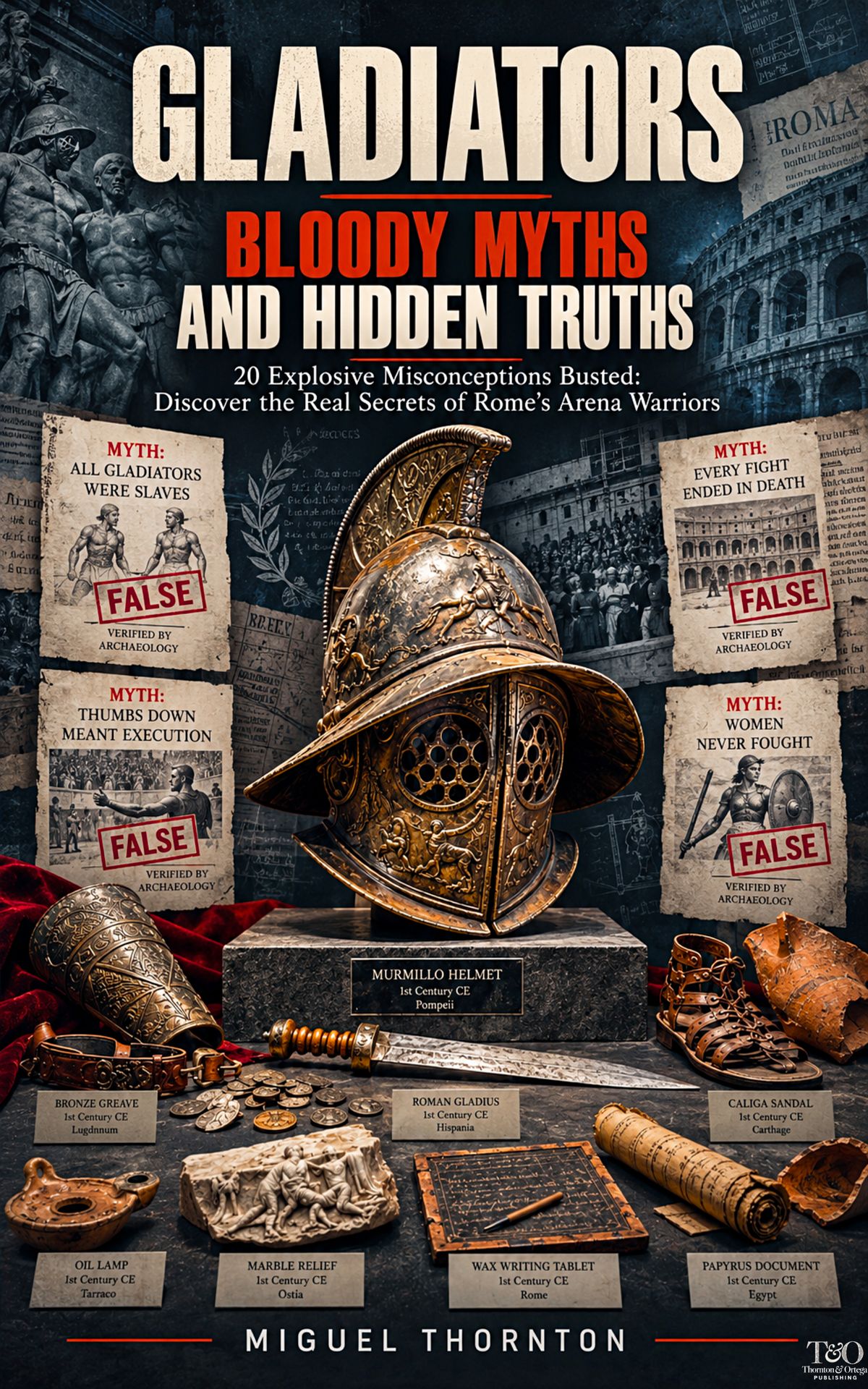
Yes. Besides the fall of the West, it examines everyday-life myths: gladiator inscriptions and hiring law, the meaning of “vomitorium,” togas as daily wear, and whether statues were painted.
What kinds of sources does the book rely on?
Inscriptions, papyri, administrative records, archaeology and ancient writers read for their biases, plus modern science: ancient DNA from sites around Rome, isotopes in teeth and bones, and lead traces in river sediment.
Does the book explain how Rome’s free grain system worked?
Yes. It covers who qualified, the monthly ration of five modii, and how grain reached the capital.
Reader reviews
No reviews yet.