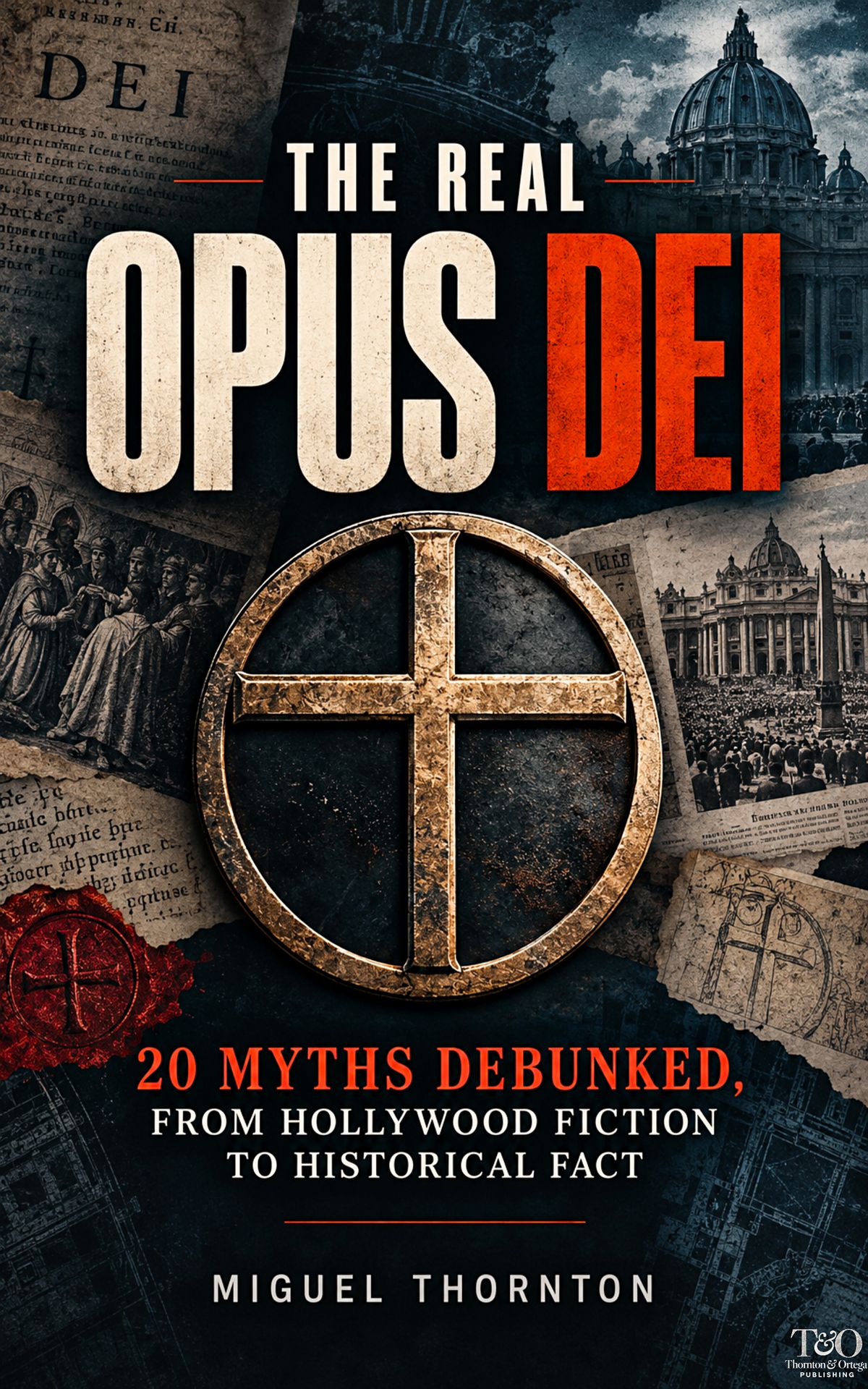
The Real Opus Dei
Twenty myths, from Hollywood fiction to historical fact

20 chapters · 104 pages · EPUB & PDF
$6.99
EPUB + PDF · instant download
- Secure payment by Stripe
- Instant download
- 14-day refund before download
EPUB + PDF · works on any device · no DRM
Paperback · only on Amazon (opens in a new tab)About this book
For millions of readers, Opus Dei arrived in a thriller that printed the word FACT above its opening page. Some of what that page vouched for was invented. Some was true. And several of the gravest charges against the organization never appeared in the novel.
This book sets twenty popular claims, one at a time, against the record: canon law, court judgments, parliamentary inquiries, the prelature’s statutes, former members’ testimony. You learn which claims collapse, which inflate a real practice, and which the documents make heavier.
The Priory of Sion, the secret society driving the plot, was registered in 1956 by Pierre Plantard, who admitted under oath in 1993 that he had invented the whole story. The cilice is real, but it is a wire band about the width of a watch strap, worn on the thigh for about two hours a day by celibate members, not by the married majority. And no novelist produced the federal investigation in Argentina, where forty-three women who did domestic work in Opus Dei houses have brought accusations the organization denies.
The next time Opus Dei comes up, you will know which version you are hearing.
Questions about this book
Does the book cover real abuse cases involving Opus Dei priests and schools?
Yes. It examines the 2020 Vatican sentence against priest Manuel Cociña, the Gaztelueta school case in Spain’s courts, and the restrictions the Vatican placed on Cardinal Juan Luis Cipriani.
Does the book cover Opus Dei’s role in Franco’s Spain and its finances?
Yes. It covers the technocrat ministers named in 1957, the 1969 Matesa scandal, Opus Dei’s published accounts, and the Banco Popular dispute raised in Gareth Gore’s 2024 book Opus.
Where do the facts in the book come from?
Each chapter ends with a source note naming what it draws on. These include French appeal court judgments in the Tissier case, a 1997 Belgian parliamentary report, a Justice Department review of the Hanssen case, and Opus Dei’s own annual financial reports.
Reader reviews
No reviews yet.