Why Did ueno bank Fail? Follow the Incentives
Paraguay's ueno bank didn't fail because it was digital. Loans to its owners' firms, a regulator from the bank and parked public money explain the collapse.

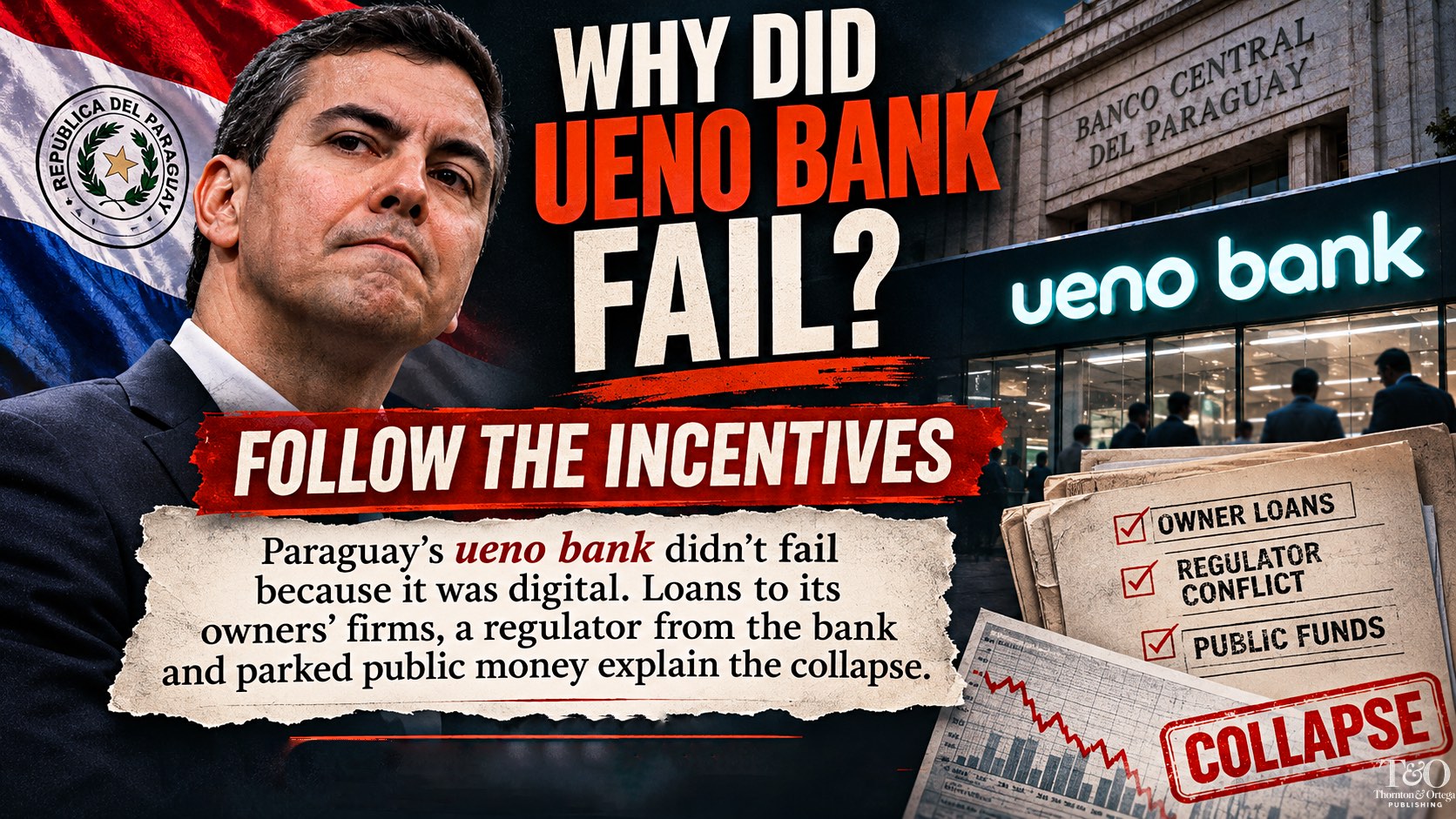
Paraguay's ueno bank did not fail because it was digital, and it did not fail because journalists scared its customers. On November 2, 2026, the central bank's board voted unanimously to put it into resolution after its solvency ratio fell below half the legal minimum. The first thing regulators had flagged was loans to companies tied to the bank's own owners. The app was new. The problem was very old.
Within days, about 3 million customers, roughly 60% of Paraguay's adults by the bank's own count, were locked out of their accounts. The head of the central bank had resigned, and President Santiago Peña had announced his own resignation. Most coverage stops at the scandal. A more useful question is mechanical: at each point where someone could have stopped this, what was that person rewarded for doing?
The oldest way to break a bank
Banks hold other people's money. If the owners can lend that money to their own companies, they keep the upside when those companies do well and leave depositors with the loss when they don't. That's why most banking systems put strict limits on related-party lending. The Associated Press account of the seizure reports that Paraguay's regulators first raised concerns about exactly this kind of lending at ueno.
The details reported since then fit the pattern. Supervisors ordered the bank to reduce its exposure to companies linked to its controlling group. In June 2026, ueno moved a loan portfolio of about $74.4 million to Vinanzas, a related company. The central bank then found signs that Vinanzas didn't have the means to pay for those loans and had been financed, indirectly, by ueno itself, according to Infobae's breakdown of the central bank's findings.
Read that slowly. The risky loans left the balance sheet, and the money used to buy them came from that same balance sheet. Prosecutors suspect the arrangement may have hidden the bank's real equity position. They have charged 27 people, including eight directors, with offenses that include breach of trust and attempted fraud. Charges are not convictions, and the case is only days old.
Four days before the seizure, ueno announced a $100 million capitalization plan. Well-capitalized banks rarely need to announce how they plan to get more capital.
A referee hired from one of the teams
Carlos Carvallo ran the lender that became ueno until 2023. Shortly after taking office that year, Peña named him president of the central bank. Critics called it a conflict of interest at the time. The central bank says Carvallo recused himself from decisions involving ueno.
Take the recusal at face value. It still doesn't address the incentive problem. A supervisor doesn't need to sign a decision to shape how hard his staff pushes on a file. An examiner who knows where the boss came from also has a career to think about, and careers tend to respond to signals like that.
Peña himself was a business partner of Grupo Vázquez, ueno's owner, until March 2025. The bank says he was never a shareholder or investor, and Peña denies wrongdoing. For months he dismissed questions about ueno's finances and accused the press of stoking fear. When the bank fell, Carvallo said recent news reports had sped up the collapse. They may have sped it up. They did not write the loans.
Whose money was big enough to care?
Paraguay guarantees deposits up to 75 monthly minimum wages, about 228.3 million guaraníes or roughly $38,000 per depositor, per institution. Preliminary estimates suggest about 97% of ueno's depositors were fully covered. That's good news for them. It also tells you who had no reason to watch the bank. If your balance is fully guaranteed, the bank's loan book is somebody else's problem. Economists call this moral hazard. Most depositors would call it common sense.
The people who did have a reason to watch were the large depositors with balances above the cap. At ueno, a large share of those were public bodies. The bank's president said in October that public money made up about a quarter of its deposits, and ueno says it manages $800 million to $850 million of it. The AP reports that about $380 million belongs to IPS, the state pension and health fund.
Here's the question almost nobody asks: inside a public pension fund, who loses personally if the bank fails? The retirees, eventually. The officials who chose the bank, almost never. In July, the Paraguayan daily ABC Color reported that IPS held about 11% of its portfolio at ueno, above the 10% per-institution ceiling set by law, and that the fund's investment director acknowledged the bank was over the limit. So the rule existed, but the people responsible for following it were investing other people's money.
What depositors actually get back
Not everyone has been repaid yet. Congress passed an emergency law in record time, and Peña signed it on November 4. It allows each depositor an advance of up to 40 monthly minimum wages, about $19,800, starting within 24 hours of the law taking effect and finished within five business days.
On the night of November 5, the central bank began paying a first installment of up to 10 million guaraníes, about $1,565 at its exchange rate. That first round goes to depositors who owe nothing to ueno and have an account at another bank. Smaller balances are paid in full. Everything else follows the central bank's schedule.
Above the $38,000 cap, nothing is promised. The central bank has said only that it will seek "the greatest possible protection." How much large depositors recover depends on what ueno's assets turn out to be worth. IPS has said it will take legal action to recover its investment.
Why a resignation didn't settle it
On November 5, Peña announced his resignation in a video. In Paraguay, Congress has to accept a president's resignation before it takes effect. The same day, the Chamber of Deputies voted 78 to 0 to impeach him and voted 48 to 30 against impeaching Vice President Pedro Alliana.
From there, incentives explain more than speeches do. A president who resigns keeps the right to a lifetime Senate seat, along with its immunity. A president removed by impeachment loses it. When the joint session met to vote on the resignation, lawmakers from Peña's Colorado Party walked out and the session collapsed for lack of quorum. The Senate opened the impeachment trial instead. As of November 6, Peña is still formally president, his defense is scheduled before the Senate, and removing him takes 30 of 45 votes.
Party leader Horacio Cartes, Peña's political mentor, publicly backed the impeachment. One reading is that the party is cutting one man loose while keeping the presidency, since Alliana, also a Colorado, is next in line through August 2028. Another is that the party is trying to rebuild its credibility. Either way, the scandal grew inside a Colorado government, under a central bank chief a Colorado president appointed. Alliana himself has suspended his 2028 presidential bid, saying the party has to put its own house in order first.
The questions to ask about your own bank
It's tempting to file this under Paraguay, but none of the parts are unique to Paraguay. Owners who can lend to their own companies, a supervisor too close to the banks he supervises, public money placed by people who don't bear the loss, and a guarantee that tells most depositors they don't need to look. Each piece is ordinary. Put them together and they tend to end the same way.
Most people choose a bank for its app, its fees or its rewards, and ueno grew fast on exactly those. Fewer people ask what happens to their balance above the guarantee, who owns the bank, or what else those owners own. In the United States the line is $250,000 per depositor, per insured bank, for each ownership category. If your savings sit above your country's limit, spreading them across institutions costs almost nothing. Finding out the hard way costs a lot more. If you want the plain-English groundwork first, our reading list on how markets, money and the Fed work is a good place to start.
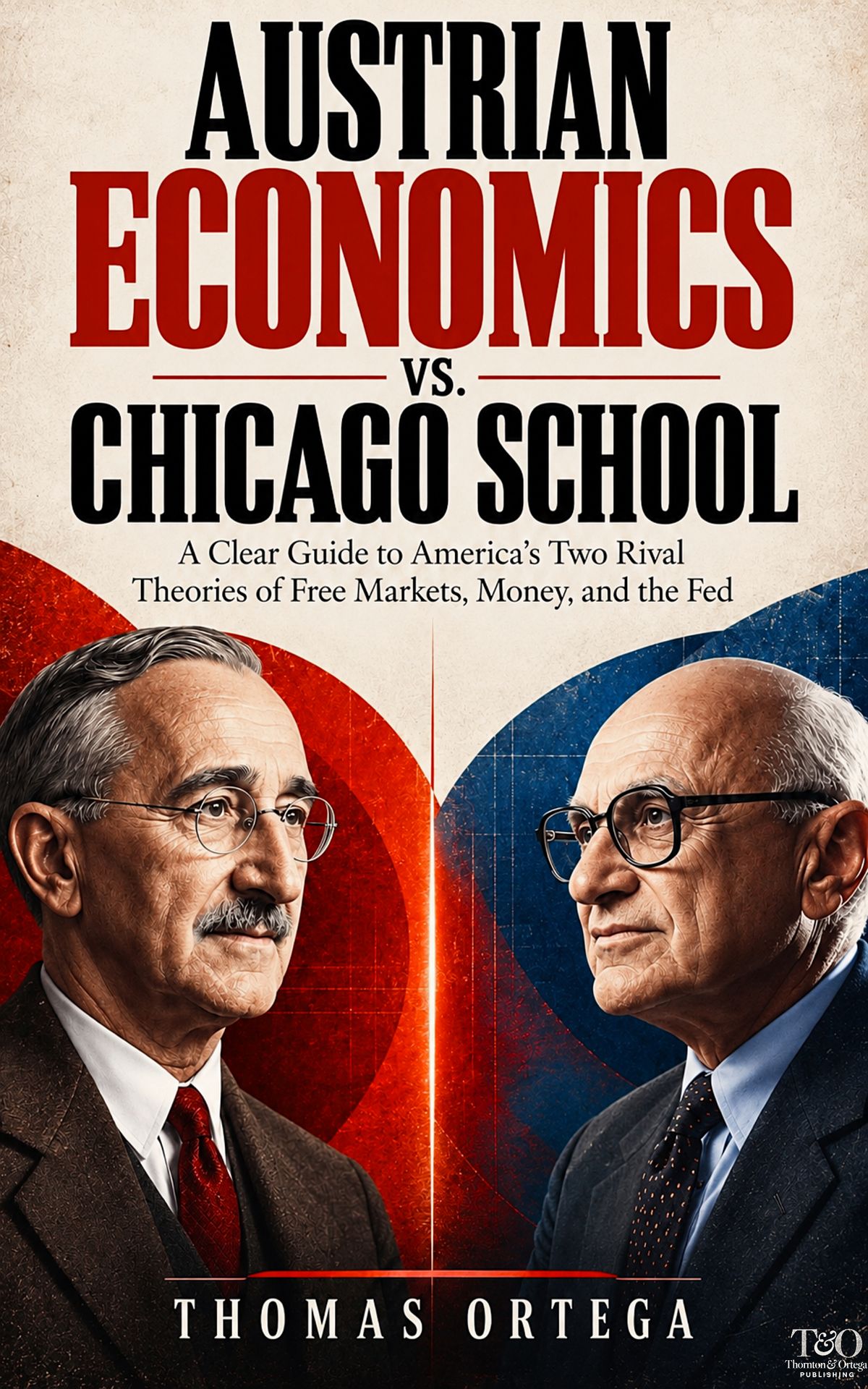
Every bank failure eventually becomes an argument about the central bank: whether it was too lax, too close to the industry, or too powerful to begin with. Free-market economists don't agree on the answer either. Austrian Economics vs. Chicago School shows how the two rival traditions explain the Great Depression, when the U.S. money supply fell by more than a third, and why one school wants the Fed bound by a rule while the other challenges its monopoly. If ueno has you asking who was supposed to be watching, that's the same argument.