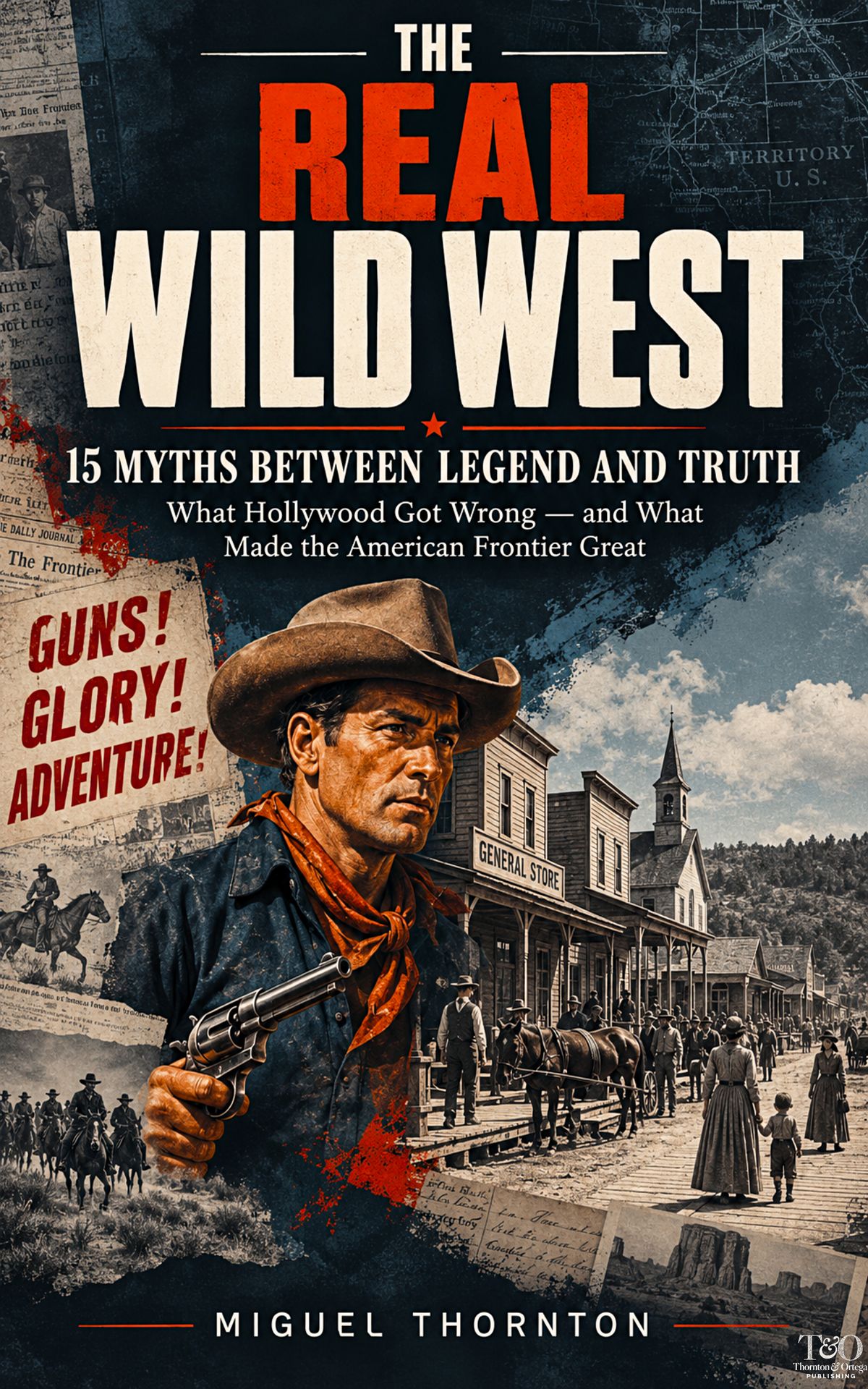
The Real Wild West
15 myths between legend and truth: what Hollywood got wrong, and what made the frontier great

15 chapters · 120 pages · EPUB & PDF
$6.99
EPUB + PDF · instant download
- Secure payment by Stripe
- Instant download
- 14-day refund before download
EPUB + PDF · works on any device · no DRM
Paperback · only on Amazon (opens in a new tab)About this book
The Wild West most Americans picture, with its noon showdowns and lawless streets, was assembled by dime novelists, showmen, and film studios. The frontier left a different account in court dockets, census schedules, town ordinances, homestead deeds, and diaries written for no audience at all.
This book holds the familiar claims about the West up against that paperwork, so you know which parts of the legend the record supports, which it contradicts, and where, the author argues, it undercuts the legend’s harshest critics as well.
The five Kansas cattle towns of Western film fame recorded forty-five homicides between 1870 and 1885, far fewer than the movies imply, though the book shows the rate was still high for towns so small. In Bodie, California, the historian Roger McGrath counted twenty-nine killings from 1877 to 1883, nearly all quarrels between armed young men who had been drinking; robbery and violence against women, children, and the old were close to nonexistent. In March 1870, six women sat on a grand jury in Laramie, Wyoming Territory, the first anywhere in the world.
You finish with a frontier more self-governed and more mixed than its legend, and deadlier in places than nostalgia allows.
Questions about this book
Does the book cover Jesse James and Billy the Kid?
Yes. One chapter checks the Robin Hood legend against the 1866 Liberty, Missouri bank robbery, the 1876 Northfield, Minnesota raid, and the Lincoln County, New Mexico court records.
Where do the facts in the book come from?
Every chapter closes with a plain list of where its claims came from: period newspapers, county and territorial archives, state historical societies, published memoirs, and scholarship such as Robert Dykstra’s The Cattle Towns.
Does the book cover the claims that westward expansion was genocide or imperialism?
Yes. Two chapters examine those charges, drawing on fur-trade ledgers, the 1863–64 Navajo removal to Bosque Redondo, the Treaty of Guadalupe Hidalgo, and General Land Office homestead records.
Reader reviews
No reviews yet.